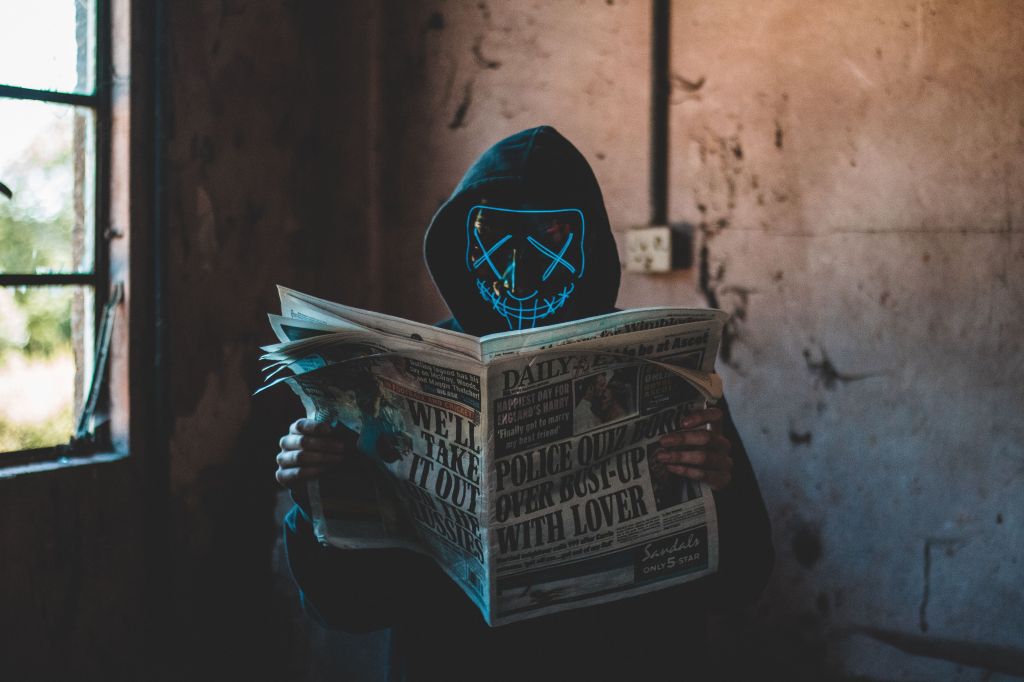
I hate the narrative that you shouldn’t trust “the media”, or that journalists are constantly lying to keep you scared just so you engage. For people who don’t consistently read thenews, watch television broadcasts or support paid journalism, this trope isn’t a genuine critique – it’s an excuse.
Funnily enough, this narrative is most aggressively pushed by people in positions of power and influence – the exact people who have the most to lose if those same platforms expose them. When Donald Trump screams “fake news” to discredit outlets that criticise him or his policies, his followers blindly echo the delusion that the entire press is deceitful. Essentially, he’s telling people not to trust those who are criticising him. Meanwhile, the people who seem to boycott mainstream news end up getting their information from conspiracy theorists on social media or, worse, InfoWars.
While the media certainly gets things wrong and everything needs to be consumed with a critical mind, we need to remember one crucial thing: social media is held to zero standards, while journalists are.
On socials, people lie for clout. The platforms – be it Facebook, X, Instagram, or Truth Social – actively reward explosive, divisive takes with higher engagement, leading to more dopamine. The reality is that the truth is usually much calmer and less combative, so the algorithm buries real mainstream news in favour of outrageous comments from figures like Pauline Hanson or Donald Trump.
The same applies to the extreme left. In those echo chambers, mainstream media is often dismissed as a tool of “corporate shills” or accused of manufacturing content to protect “the establishment”. Yet both extremes continue to echo the exact same sentiment: “traditional media cannot be trusted”.
Sure, outlets like Fox, the Daily Mail, CNN, HuffPost, and even The New York Times have published misleading or false information among their millions of articles. But when newsrooms are firing off stories every few minutes, they are bound to miss the mark occasionally. Not every scientific paper turns out to be factual; that doesn’t mean science is not to be trusted. In fact, just as a retracted scientific paper proves the peer-review system works, a published correction in a newspaper proves journalistic standards exist. Social media influencers, on the other hand, simply delete their posts and pretend they never lied – or worse, keep the lie published and continue to present it as fact.
Real journalism holds the rich and powerful to account, and to those in power, that scrutiny is a threat. By branding well-researched, credible reporting as “fake” or “misleading”, powerful figures give the public permission to stop paying attention. And the easiest way to control the masses is to stop them from thinking critically about the information in front of them.
Once you discredit the independent sources capable of critiquing the powerful, you gain a monopoly on “truth”. What better way to achieve that than by screaming “fake news” from a presidential podium? Or, if you aren’t the president, by using PR firms and minions to plant bogus tips with a naive journalist to deliberately muddy the waters?
The reality is working journalists – like myself – are bombarded with spin and false media releases 24/7, and our job is to verify it. Sometimes we get it wrong. However on social media, there are not professional standards and anyone can publish information unvetted. The consequences for this have real-world consequence pushing the bar into the extreme for engagement.
So, when elites stand up and call trusted publications deceptive, the irony is glaring. The very people holding all the power are trying to convince you that the people investigating them are the ones lying to you, not them.
You might disagree with me on some of these points, and its okay to disagree with a blog post – the world won’t end. And the mainstream media certainly has plenty to answer for when it gets things wrong or when its reporters go rogue. However, if you look past the cherry-picked examples of outlets intentionally misleading an audience or getting facts wrong, you’ll find those instances are few and far between.
Most publicise their bias, and it’s up to the audience to employ enough media literacy to dismantle that information and make their own minds up. Even when mistakes happen, they are often the result of sophisticated disinformation campaigns rather than malice – yet the public too often shuts out the professionals in favour of influencers and a novice with a Facebook page.
If you rely solely on social media to make sense of the world, you are turning your back on a vital profession built to expose the rich and powerful and broker the truth. The next time someone with power and influence tells you not to trust “legacy media”, ask yourself: Why?
Perhaps they are just afraid of what actual journalism – if supported – might uncover.




Leave a Reply