
When it comes to the neglect and abuse of children by delusional leaders, one can only hope that authorities step in with the victims’ best interests at heart. However, the 2016 documentary The Family highlights the institutional failure and complicity within police forces and government agencies that allowed such cruelty to flourish in Australia. The 1970s and ’80s were certainly different times, but when atrocities against children destroy lives and compound generational trauma, swift intervention should have been a given.
Instead, The Family reveals how institutional inertia allowed an insidious sect to thrive. Deception was treated as fact despite mounting counter-evidence, and investigators routinely framed questions to discredit victim testimony. The coerced, coached responses of brainwashed children were taken at face value by officials, leaving the perpetrators free to continue their abuse behind closed doors.
While the film stops short of detailing the full legal and physical gravity of everything these children endured – likely due to defamation or legal restraints – it exposes an unsettling vulnerability in Australian bureaucracy: those charged with protecting the vulnerable were alarmingly easy to sideline or influence.
For those unfamiliar, The Family was a notorious cult operating primarily in Melbourne and Lake Eildon during the 1970s and ’80s. It was led by Anne Hamilton-Byrne, a charismatic woman who claimed to be the female reincarnation of Jesus Christ. While she rarely stated this outright to the public, former followers confirm they were manipulated into viewing her as divine. Children were acquired through bogus adoptions arranged with vulnerable, pregnant young women. Desperate mothers were coerced through questionable paperwork, genuinely believing their offspring were heading to secure, loving homes – completely unaware of the systematic abuse taking place once the doors closed.
The sect raised suspicion locally, but the leadership’s charm offensive managed to stifle formal scrutiny. Prominent figures – including educators, doctors and public officials – effectively gave the commune a clean bill of health. Some were active members; others were simply taken in by the polished facade of a peaceful, forest-dwelling utopia. Viewed today through a contemporary lens, the historical footage paints a damning picture not just of the cult itself, but of the systemic complacency across law enforcement and child protection services.
Yet, despite such compelling source material, the documentary itself feels underwhelming. Relying heavily on staged re-enactments alongside contemporary interviews with survivors and lingering loyalists, The Family often plays like a standard free-to-air television special rather than a nuanced feature-length documentary.
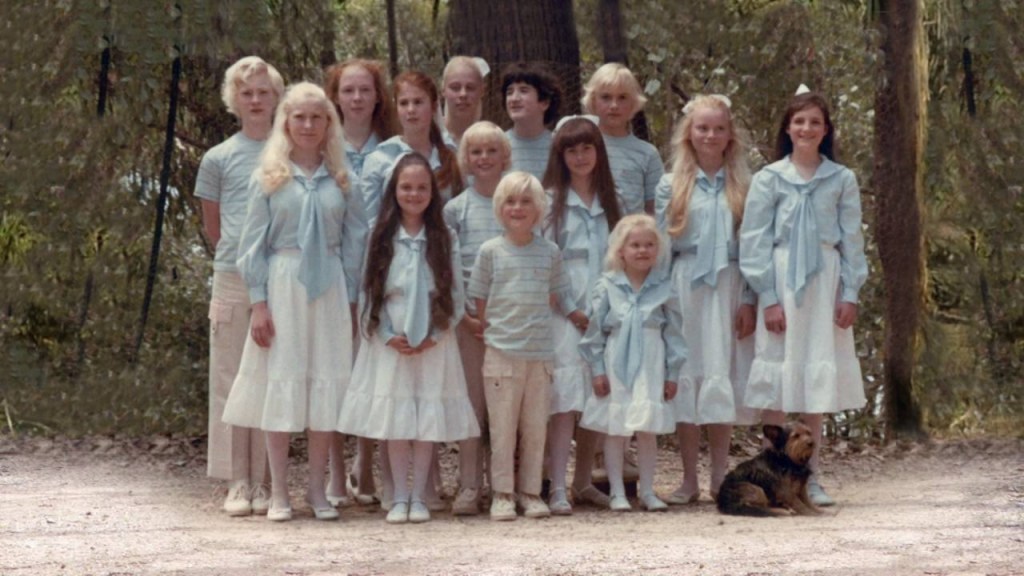
The archival home footage captured by the cult to promote its utopian vision is looped repeatedly across the 98-minute runtime. Little of it feels uniquely revealing, and its visual tone rarely shifts as new revelations come to light. The filmmakers note that the identical, bleached-blonde children were merely performing happiness on camera to avoid punishment or secure basic meals, but that observation reaffirms what viewers already assume rather than delivering a fresh narrative punch.
Director Rosie Jones also attempts to strike an objective balance by including interviews with unapologetic, current sect members. Giving airtime to those still devoted to Hamilton-Byrne risks flattening the moral weight of the film; placing the rationalisations of an indoctrinated follower on equal footing with the lived trauma of survivors feels hollow.
Ultimately, The Family does not quite stick the landing. At over an hour and a half, the pacing drags where a focused, punchy 45-minute special would have sufficed. What saves the feature-lengh are its survivor interviews: watching former cult children courageously confront their past on camera is deeply affecting. It remains an important historical record of institutional failure, even if the filmmaking itself struggles to carry the full weight of the tragedy.



Leave a Reply