
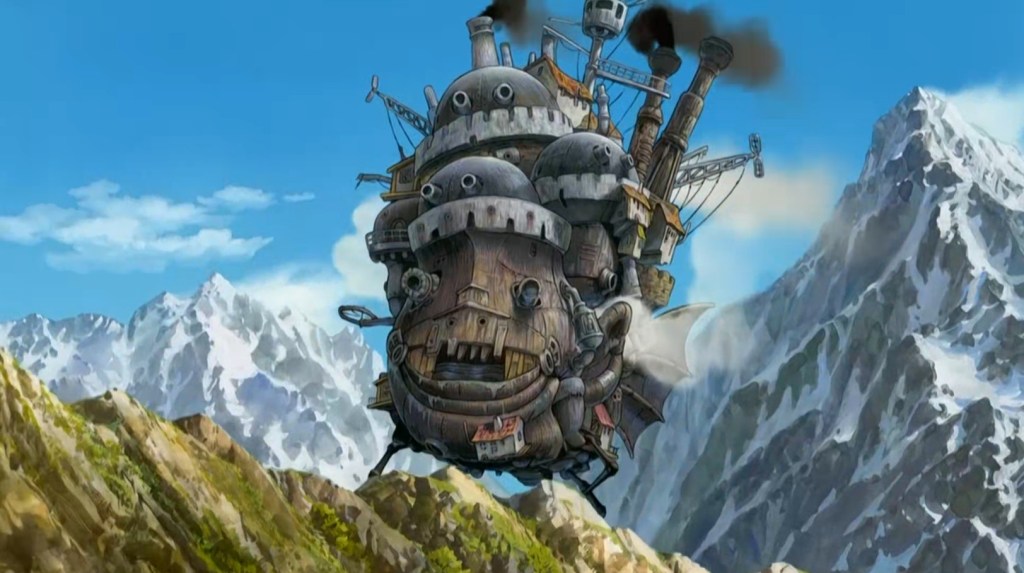
A timeless classic set in a Studio Ghibli world of characters, creatures, and unpredictable adventure unfolds in Hayao Miyazaki’s 2004 modern-day classic Howl’s Moving Castle. With stunning animation and detailed world creation, this wild ride of self-discovery follows the adventure of a young girl named Sophie Hatter as the audience is thrown into a world of magic, mystery, and enchanted landscapes against the backdrop of human arrogance and compassion during conflict.
Set during a wartime period inspired by WWII – noting its depiction of early twentieth-century technology and trade – Howl’s Moving Castle holds up even today with its anti-war themes and depictions of human faults, exploring themes of forgiveness over forgetfulness while understanding that life can lead people to make wrong choices that hurt others – even you.
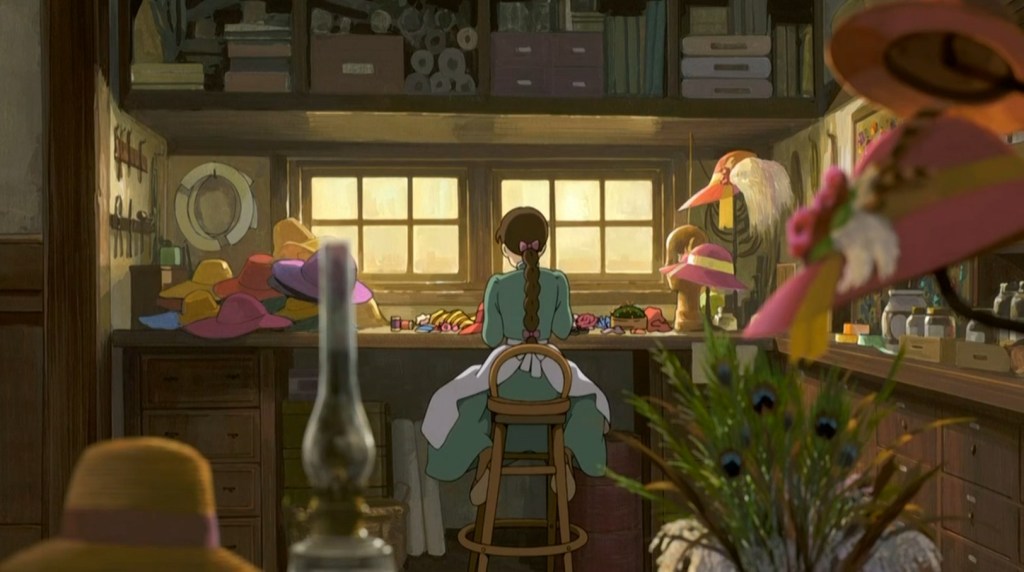
Very loosely based on Diana Wynne Jones’s novel under the same name, Howl’s Moving Castle begins by following a young woman working in her late father’s hat shop. Unmotivated to seek adventure, Sophie is content with arguably a mundane life, until a charismatic and mysterious wizard Howl crosses paths with her in an alleyway during an unfortunate encounter with unsupervised soldiers.
This is when the magic flows into the movie and a series of blob-like shape-shifters begin flowing into the alleyway, forcing the pair to escape. The gritty style of Ghibli begins to shine through, and the walls between reality and fantasy collapse in a way that plays it off as perfectly normal.
Once Sophie finds her way back to her regular life, she is pursued by the Witch of the Waste, who transforms her into an old woman fearing her youthful good looks might lure Howl into falling for her.
Having watched the English dub of the movie, I was impressed with Jean Simmons’ performance of older Sophie after having found Emily Mortimer’s portrayal of young Sophie to be uninspired. Given Christian Bale as Howl and Lauren Bacall as the Witch of the Waste immediately brought ranged and full performances early in the film, Mortimer felt flat in comparison, and as the lead, I was beginning to worry what an old Sophie acted by her would sound like. Thankfully this didn’t come through, and Simmons created magic.
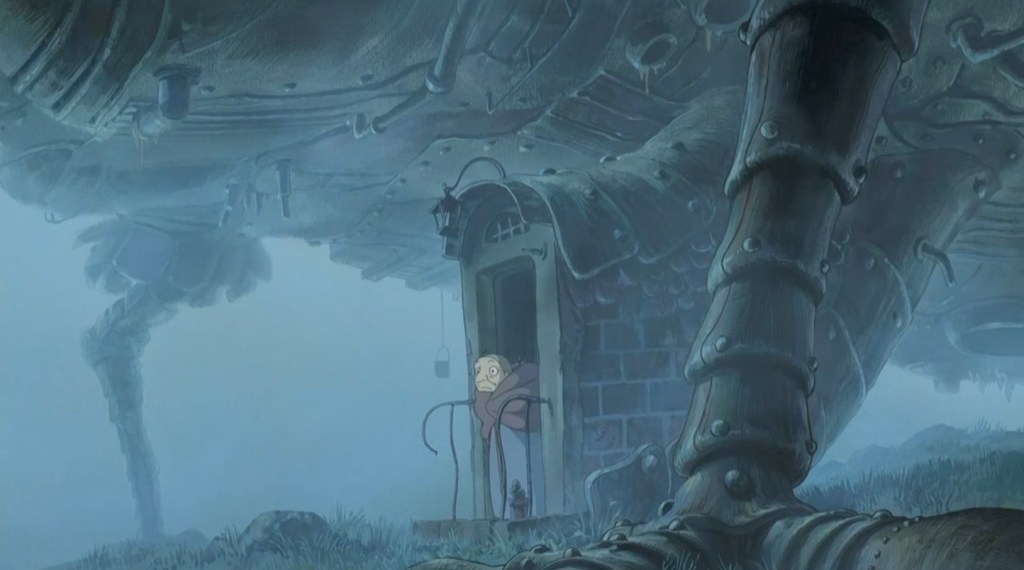
After Sophie discovers she is cursed, making her appear very old and changing voice, she flees her home for the neighboring hills. Here she comes across a sentient scarecrow stuck in a bush, and after saving it, the scarecrow leads Sophie to a giant, clanking castle walking across the hills where she seeks shelter.
That’s when the movie introduces a lineup of quirky characters, including Markl, a young apprentice; Calcifer, a feisty fire demon who powers the castle; and Howl, a charming wizard and head of the household. This is where Studio Ghibli movies shine, as you are thrown into a world where characters that shouldn’t work with each other find a way to connect despite their differences.
Howl’s Moving Castle is no different, and this just works.
However, a magic mystery is also revealed that provides a glimmer of logic behind the reasoning of this unlikely ensemble of characters as Calcifer reveals if he dies or flares out, so does Howl.
Sophie also discovers that their home in the castle has a portal to four other places, with its occupants seamlessly bouncing between different communities where they all live rich lives. Determined to unpack more of this mysterious and magical home, which may ultimately lead to Sophie discovering how to break her own curse, she begins acting as the castle’s housekeeper and slowly becomes an integral part of the household.
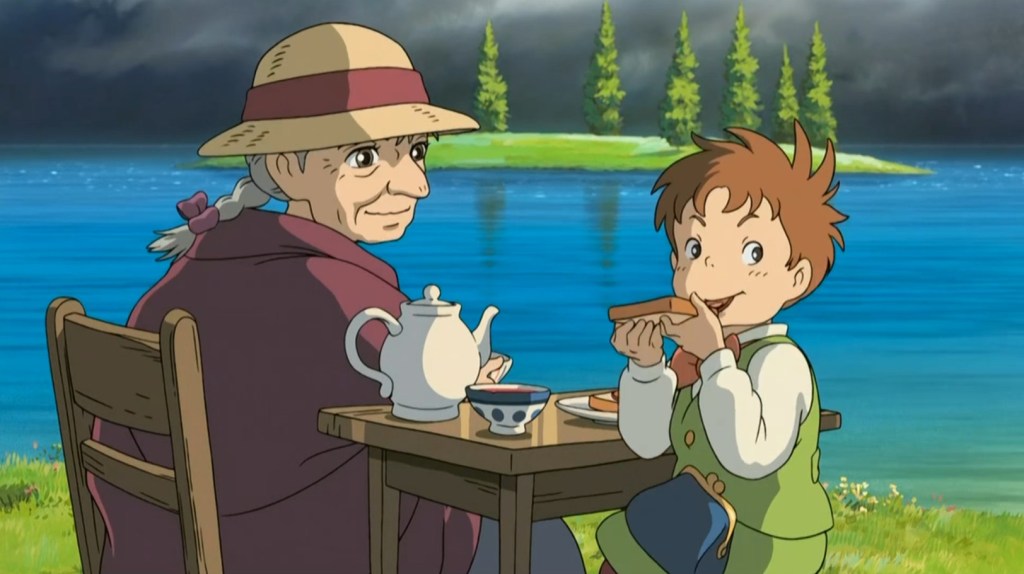
As a viewer, this feels like an odd but necessary tie-in, yet one that makes sense given how wacky these characters are and that they all just randomly came into each other’s lives at some point.
But while on the surface it appears Howl has everything under control, Sophie quickly discovers his vulnerabilities and struggles as he tries to manage his role in a war-torn kingdom whose occupants see him as nothing but a coward and traitor. Sophie begins to see Howl as a deeply compassionate wizard, one who throws himself into emotion-driven danger to save people from unnecessary hardship or death.
There is this aura of mystery around Howl that is intriguing, with his motives hidden under a veil of secrecy that not even Sophie is able to break through.
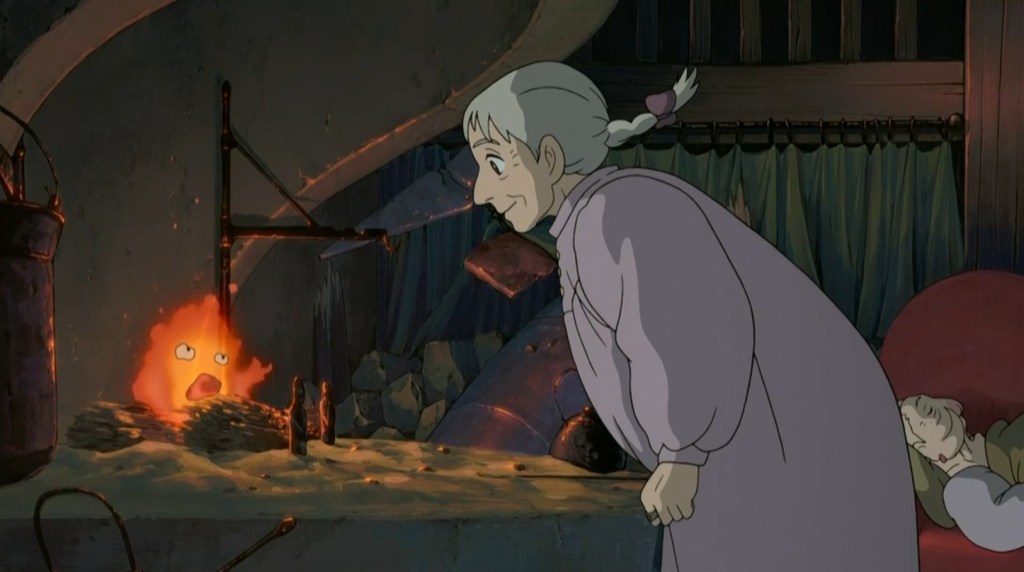
Meanwhile, this dance by Sophie to break down Howl’s tough ‘lone wolf’ exterior fluctuates the effects of her curse, hinting that her old appearance is based on her emotions. There are moments when her young self can be seen, implying the curse is tied to her self-perception and compassion for others. But as the war outside this hideaway escalates, Howl grows more desperate, pushing him to breaking point and revealing that Calcifer has Howl’s heart, literally.
I love his metaphor that the flame of this house, or rather castle, is a literal heart on fire and that of a man whose compassion and love for the innocent keeps it warm.
But the Witch of the Waste, driven by her instinctual desire for Howl’s love, steals this heart, almost dousing it and almost killing Howl in the process. But, like most movies, the perseverance of Sophie’s love for Howl inspires her to give it back to Howl, ultimately saving his life – in exchange for his wizard powers.
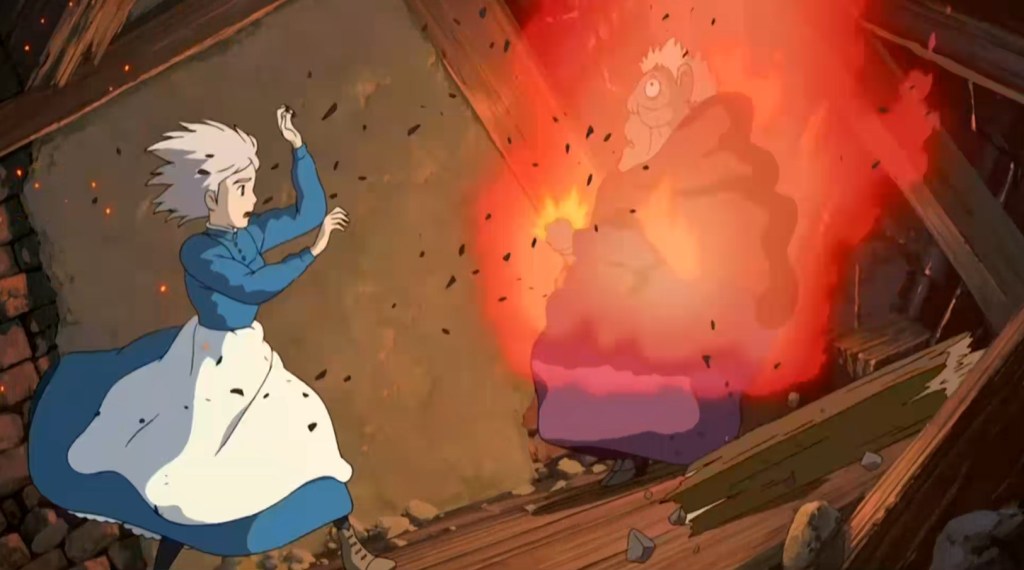
When Howl’s heart is returned, his magic world falls apart literally as his walking castle crumbles. But with Sophie now restored to her youthful self, and Howl with a heart again, it returns, and the now loving couple find themselves overcoming the tragedy, selfishness, and horrors of the world and flying off into the sunset in a new Howl’s Flying Castle.
While a textbook ‘Hero’s Journey’ ending, the way this concludes is magical and wholesome, with a few other revealing moments bringing most loose ends to a satisfying close. This unlike collection of characters, all with their own struggles, coming together to have a happily ever after is inspiring and an ending that is easy to understand and appreciate.
With its stunning art style and memorable character lineup, Howl’s Moving Castle is a piece of cinematic mastery from one of the greatest feature-creating studios Japan has ever produced. From his simple plot made magical through imagery and character development to the detail etched in the breath-taking landscapes and visuals, Miyazaki’s masterpiece is one that has and will continue to stand against the decay of time.
A must-watch for all ages.



 Scott Murphy
Leave a comment