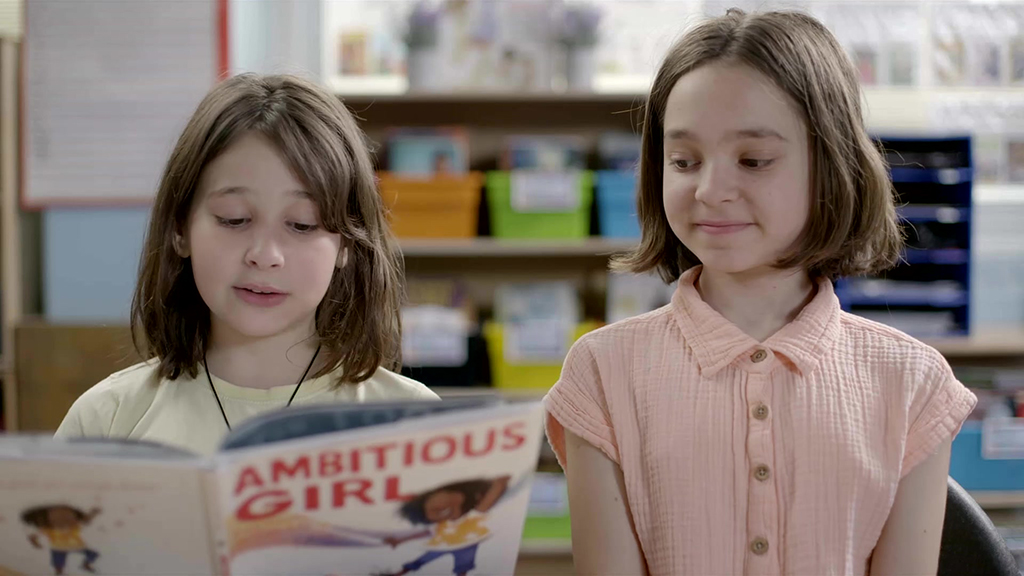
Sheila Nevins’ The ABC’s of Book Banning explores the topic of, well, book banning in American schools by selecting absolutely absurd examples of banned books that it breaks down with a single quote.
According to the movie, more than 2,500 books have been removed from US school districts and labeled with one of three categories: “banned,” “restricted,” or “challenged,” preventing their free consumption by tomorrow’s leaders.
The short film implies, not very subtly, that the reasoning behind these classifications is based on racist, sexist, and homophobic alt-right ideologies without actually divulging the actual reasoning behind their classification. Instead, it presents the idea that all books should be free to consume without hindrance or censorship, leaving the reader to decide what is okay to believe – a conclusion I personally agree with.
As a journalist, I completely agree with freedom of the press (be it book, newspaper, or visual), even if that means books like Mein Kampf by Adolf Hitler or The Art of the Deal by Donald Trump and Tony Schwartz are available to everyone. But as a journalist, I also understand why certain information, or rather misleading information, or that which is graphic in nature might not be appropriate for a school library.
If a book is banned because it depicts a same-sex couple raising a family, then I’ll be pitchforking that decision; but if books promoting misogynistic ideologies such as those echoed by Andrew Tate are offered to my child unrestricted, I’d also be pitchforking that institution.
When watching Nevins’s film, I couldn’t help but notice that the books she was discussing, with the obvious implication of ‘not being racist’ and ‘being compassionate toward others,’ had lots of arguments missing.
The first book mentioned in the movie is Kurt Vonnegut’s Slaughterhouse-Five, which was banned in schools for graphic depictions of sex; then James Baldwin’s Go Tell It On The Mountain was challenged in schools for “pornographic” content.
These books don’t come up again in the movie, nor are their reasoning for the bans explained – I had to Google them afterwards. Instead, at the end of the movie, select quotes are pulled from a series of books—usually by non-Caucasian or female authors—providing inspiring statements as the word “banned” in red floods the screen.
At the 23 minutes 54 seconds mark, Nevins shows the cover of Sarah J. Maas’s A Court of Mist and Fury with the quote “many atrocities have been done in the name of the greater good.” It makes you think, ‘Why would a book like this be banned with such an insightful view of the world?’
Well, one Google search later, and according to Marshall University, it was banned for sexually explicit content. If you Google the blurb, you’ll find that this book is a fantasy romance novel full of sex and gore (and a “non-graphic” rape scene, may I add) with most readers on Common Sense Media recommending a reading age of 17+.
Here’s another quote I stole from Reddit that wasn’t included in the documentary;
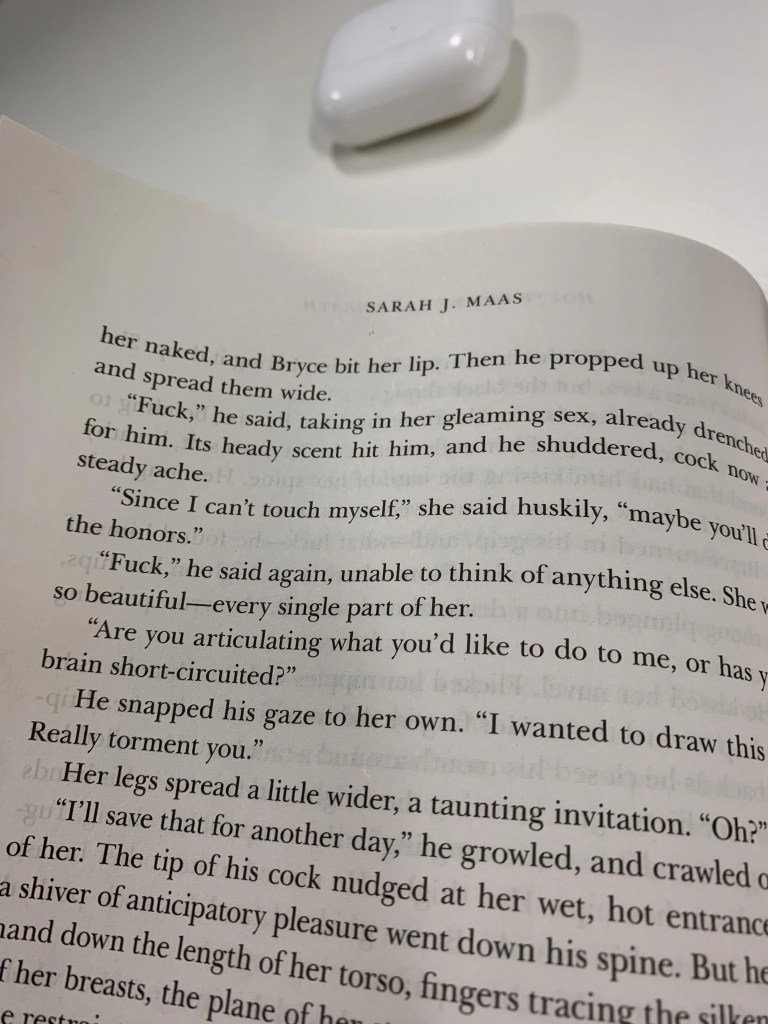
Now I’m not saying this book should have been banned, but implying that it was banned because the school board wanted to corrupt children’s minds with fear is not it. It also failed to mention that the banning of the book was petitioned, with the courts upholding the school board’s decision to ban the book based on “obscenity.”
Also, it was only banned at the Virginia Beach City Public School, not America-wide and not at public libraries. Not once in the movie is there any clarification of this, just an inspiring quote about the state of the world overlaid with the word “banned” in bold red typeface.
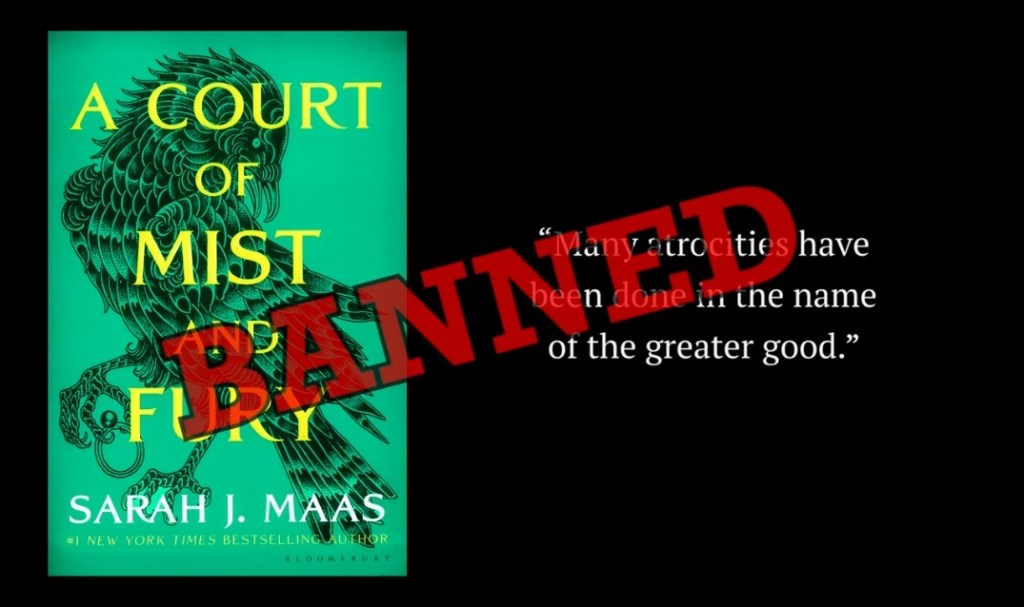
Nevins uses these quotes as examples to highlight the absurdity of the ban or restriction classification, while implying those banned books are trying to stifle freedom of expression, similar to that done by the Third Reich during WWII. Yes, she compares book banning to Nazis very proudly.
While I agree wholeheartedly with the notion that banning books is stupid and shouldn’t happen based on personal biases, I can’t accept the reasoning that those banning are doing so out of racist, sexist, or homophobic tendencies.
There is no doubt that book banning is disproportionately covered in systemic racism and sexism, with black authors being banned more than white, and female empowerment being labeled ‘extremist content’.
However, this film misses an opportunity to highlight the real issues while taking an easy, lazy, and frankly misleading stance on a complicated issue. Should book banning be banned? Yes, but this isn’t the film to get it there.
 Scott Murphy
Leave a comment